The neighborhood is the main customer of the development of the society
 publisher
ARTICLE
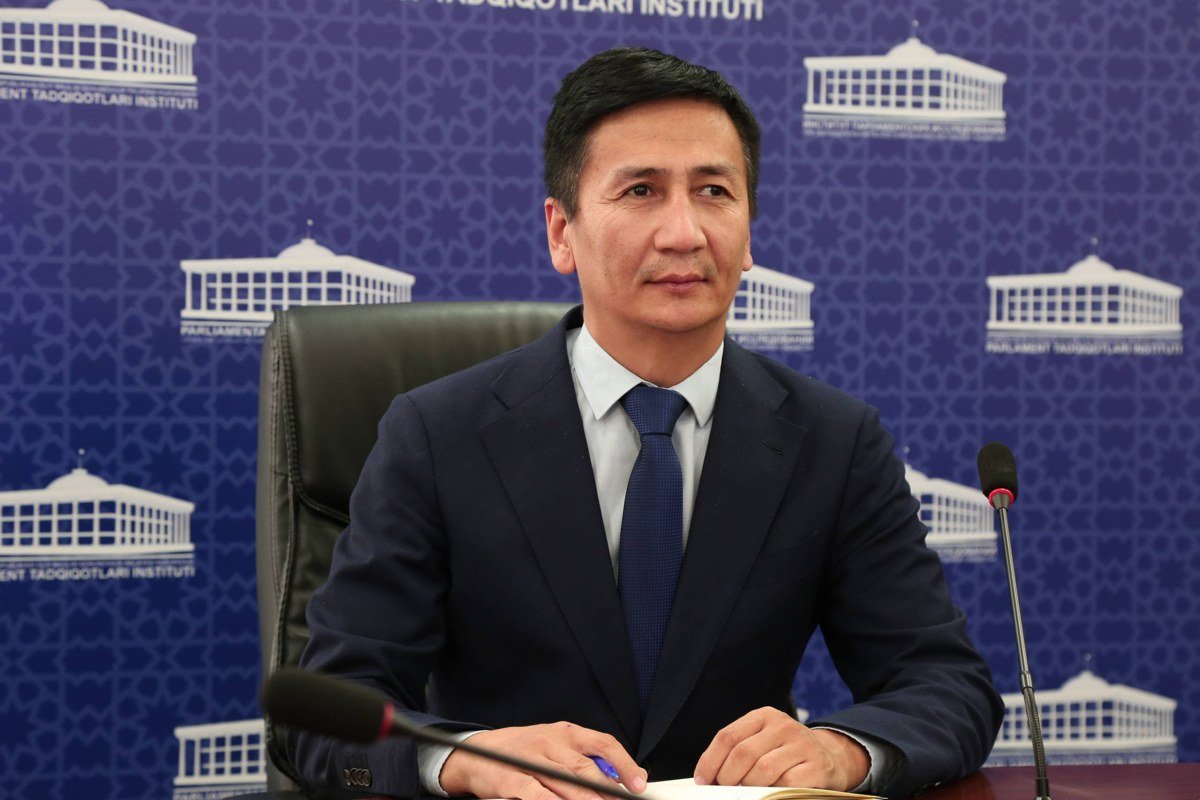
Oybek QOSHBOQOV
Head of the Department of the Parliamentary Research Institute under the Legislative Chamber of the Oliy Majlis, Doctor of Philosophy in Economics
In Uzbekistan, the role of neighborhoods in society is changing radically. Now they have a decisive say in the formation of local budgets and infrastructure projects.
During his visit to the city of Bekobad in July 2026, the President got acquainted with the construction works being carried out along the "Khos Yaz" canal and in the neighborhood of Dostlik. On the basis of the master plan for comprehensive development of the area, a 3-kilometer footpath and 5.4-kilometer strong fences were built, and two bridges were built along the canal, which was once neglected and in a disorderly state. 27 new trade and service facilities were established on the coast, and 167 permanent jobs were created. 1.1 billion soums have been invested by entrepreneurs in Dostlik neighborhood this year, and 25 new jobs have been created. Bekobad city museum was established at the expense of "Initiative budget" funds.
This example clearly shows the essence of the neighborhood order system. The area will be developed on the basis of a master plan, the investment of entrepreneurs and the initiative of the population will be directed to a single goal, and the achieved result will be evaluated, first of all, by the created jobs and the well-being of the population. Now this approach is rising to the level of national policy.
From speech to decree
On August 28, 2026, at the solemn ceremony dedicated to the 35th anniversary of the state's independence, the President announced seven national programs aimed at increasing human dignity. Explaining the necessity of the sixth program, the head of state said: "The mood of our people, the well-being of families, the dreams of young people, and the initiative of entrepreneurs are first of all manifested in the neighborhood."
Based on this, the task of fundamentally changing the approach to the development of state programs, forming the district budget, investment program and infrastructure projects based on the order of the neighborhood was determined. In this case, the needs of citizens and the well-being of the neighborhood are "defined as the main criteria".
Two and a half months later, on November 10, Decree No. PF-242 "On measures to implement national programs aimed at increasing human dignity" was adopted. With this document, seven strategic national programs for 2027-2031 and their target indicators were approved.
The sixth national program covers three important interrelated tasks. First, state programs are formed based on the demands and needs of the communities. Secondly, the district (city) budget, investment programs and infrastructure projects are developed based on the order of the neighborhood. Thirdly, a reasoned decision-making procedure will be introduced for neighborhood orders within 30 days.
The financial foundation of these tasks was created earlier. In the President's address to the Oliy Majlis and the people of Uzbekistan on December 26, 2025, it was announced that 20 trillion soums will be allocated to the regions for the development of the infrastructure of neighborhoods for the first time.
This task was also strengthened in Decree No. PF-22 of February 16, 2026, adopted in the year "Neighborhood Development and Community Improvement". The document sets the task of creating an additional 100,000 new jobs by launching more than 10,000 production and service projects in the neighborhoods. A resource of 5 trillion soums is provided for crediting such projects.
The "Program of priority reforms for further improvement of the infrastructure of the neighborhood and bringing them the image of New Uzbekistan" attached to the decree defines the directions of spending of funds. These tasks serve the direction of "Ensuring the well-being of the population through sustainable economic growth" of the "Uzbekistan - 2030" strategy, which was updated by Decree No. PF-21.
Separate financial sources for neighborhoods are also being formed. In accordance with the Decree No. PF-116 of June 24, 2026, 200 billion soums are allocated from the republic budget to the fund for the promotion of neighborhood activities of the Association of Neighborhoods of Uzbekistan.
Also, starting from January 1, 2027, 15 percent of property and land tax revenues paid by individuals (excluding non-residential objects) will be directed to the fund for solving socio-economic problems of the neighborhood. According to the information of the President, 5% of the land and property tax from non-residential objects in the neighborhood will be left at the disposal of the neighborhood, as a result of which they will have 400 billion soums of funds per year.
Legal nature of the order
Chapter XXI of the Constitution of the Republic of Uzbekistan clearly distinguishes the powers of local state authorities and citizens' self-government bodies.
According to Article 122 of the Constitution, the Councils of People's Deputies are empowered to review and adopt the relevant local budgets and supervise their implementation. Article 123 assigns the task of formation and execution of the local budget to the governor. According to Article 127, citizens' assemblies are self-governing bodies and do not belong to the system of state authorities. The state creates the necessary conditions for their activity.
The neighborhood order represents a new form of interaction between these three entities. The assembly of citizens does not draw up and approve the budget. He explains to the hokim what needs the district budget should serve. The Council of People's Deputies controls the extent to which the hokimia takes these needs into account.
Judging from the content of Decree No. PF-242, it can be said that the legal significance of the neighborhood order is manifested, first of all, in the obligation to respond to it. The authorized body can accept the order, postpone it for the next period, indicating the specific period and source of financing, or reject it for valid reasons. However, he has no right to leave it unanswered. The 30-day period and reasoned decision requirement set forth in the Ordinance reflect this very principle.
The legal basis of this approach dates back to 2021. In particular, by the decision PQ-5072 dated April 13, 2021, the procedure for directing at least 30% of the additional funds of the district and city budgets to activities formed on the basis of public opinion was introduced.
According to the Ministry of Economy and Finance, since 2021, more than 24,000 projects have been recognized as winners within the "Initiative Budget" process, and more than 26 trillion soums have been allocated for their implementation. In 2026 alone, 6.5 trillion soums have been allocated from the state budget to more than 4,800 winning projects.
However, in the "Initiative budget" only a certain part of the local budget is allocated by voting. The neighborhood order allows participation in the very stage of forming the district budget, investment program and infrastructure projects. The decisive factor is not the number of votes, but the real need based on calculations.
The organizational foundations of the mechanism are being formed step by step. In accordance with Decree No. PF-116, information systems of ministries and agencies will be integrated on the electronic platform "Digital Mahalla". Neighborhoods are divided into "red", "yellow" and "green" categories based on indicators of infrastructure, entrepreneurship, poverty, unemployment, crime, troubled families and appeals.
At the meeting held on July 16, 2026 under the chairmanship of our President, it was determined that the chairman of each neighborhood should form an economic and social order of his territory, in which the problems will be accurately calculated, projects will be prepared, and relevant tasks will be assigned to the responsible organizations.
Currently, this procedure is mainly regulated by Presidential decrees. In order to turn it into a stable legal mechanism, it is appropriate to define the concept of neighborhood order, the procedure and terms of its approval, the place of the order in the budget calendar, the mandatory content of the justified decision and the procedure for its publication, the right to appeal to the Council regarding the rejected order in the Budget Code and the Law "On Self-Governing Bodies of Citizens".
In this case, an acceptable approach would be for the chairman of the neighborhood to prepare the order, and for the assembly of citizens to approve it. Because Article 127 of the Constitution defines the assembly of citizens as a self-governing body.
From top-down planning to bottom-up ordering
In the recent past, regional infrastructure programs were mainly formed from above. For example, within the framework of the "Prosperous Mahalla" program launched in 2018, funds were distributed through the funds under the Council of Ministers of the Republic of Karakalpakstan, regional and Tashkent city hokims.
Today, the approach to regional development is changing. Describing the duties of the head of the neighborhood, the President noted that the head of the neighborhood should turn from a person who records social problems into an "economic customer" of his area.
Expansion of financial resources is also an important aspect of this process. According to the head of our state, as a result of the expansion of the powers of the mayor and neighborhood heads, districts have an average of 22 billion soums of additional funds, and an average of 150-200 million soums fell into the neighborhood budget. It is expected that incomes to local budgets will reach 1 trillion 600 billion soums this year, and 2 trillion soums next year.
As announced in the petition, from January 1, 2026, 5% of value added tax revenues will be retained in the city of Tashkent, and 20% in other regions, and half of them will be transferred to district budgets. As a result, an additional source of 5 trillion soums per year will be formed in the district budget.
At the meeting of video selectors on January 23, 2026, it was decided to allocate 12 trillion of 20 trillion soums to "heavy" districts and neighborhoods, to focus on 70 districts and about 1,000 "heavy" neighborhoods. This year, an average of 250 billion soums was allocated to each district and 5.5 billion soums to each neighborhood for infrastructure.
The principle of distribution of funds is also changing. As stated in the petition, "every soum of these funds must create added value for our population." The procedure for receiving funds is also clearly indicated: "Please, whichever neighborhood chairman, deputy mayor and neighborhood banker make a project and justify it, should receive the necessary funds."
The essence of the neighborhood order is embodied in these two requirements: the first is that the funds be directed to specific needs, and the second is that each project is justified by its economic and social effectiveness.
2027 Budget and Parliamentary Scrutiny
The state budget of 2027 will be the first budget of the period of implementation of national programs. At the meeting held on November 13, the President of the Republic of Uzbekistan announced that it is planned to set budget revenues at 416 trillion soums and expenses at 464 trillion soums. It is planned to allocate 70 trillion soums to improve the infrastructure of regions and neighborhoods, increase employment and income of the population, develop human capital, and strengthen social protection.
The draft budget will be submitted to the Legislative Chamber of the Oliy Majlis after it is discussed in the local councils. As the mechanism is now being implemented, its full impact will be felt in subsequent budget cycles. However, the discussion of the project in the local Councils is the first practical opportunity to take into account the needs of the neighborhood.
When the draft of the district budget is being considered by the Council, the deputies should be able to see what orders were received from the neighborhoods, which of them were included in the budget, and which of them were postponed for the next period.
For this, it is appropriate to attach the register of neighborhood orders and the reasoned decisions made on them to the draft district budget. Then the fate of each order will be considered through open discussion and parliamentary control.
There are also legal means of parliamentary control. In accordance with the decree No. PF-242, parliamentary and parliamentary control over the implementation of national programs is established by the chambers of the Oliy Majlis and local councils. The "Development Strategy" center and the "Yuksalish" movement critically examine the state of affairs on the ground, taking into account public opinion.
According to Decree No. PF-22, the Cabinet of Ministers submits a report to the Legislative Chamber every six months on the implementation of the State Program. According to the decision No. PQ-388 on the implementation of the 2026 budget, the external audit conclusion of the Accounts Chamber on the target indicators of the use of budget funds will also be presented to the chamber. These tools make it possible to evaluate the effectiveness of the allocated funds based on the results achieved, not only on the basis of the amount of funds spent.
Deputies are direct participants of this process. Based on the mechanism introduced by the Presidential Decree of August 29, 2025, in 2026, 150 deputies selected 495 socially significant projects that did not receive enough votes in the "Initiative Budget" process. About 480 billion soums were allocated for their implementation.
Summarizing neighborhood orders in the electoral district and monitoring their implementation can be a logical continuation of the work of a deputy.
What does foreign experience show?
The practice of participatory budgeting originated in Porto Alegre, Brazil in 1989 and has since been adopted by more than 2,700 governments worldwide. However, in Porto Alegre itself, this practice was suspended for two years in 2017 due to lack of funds and the need for reform.
The researchers of the World Resources Institute concluded from this experience that the participatory budgeting system can be sustainable only if it relies on a thorough organizational structure, sufficient financial resources and institutions that can adapt to changing political conditions.
In South Korea, the 2011 amendments to the Local Finance Act made participatory budgeting mandatory for all local governments. After the 2014 amendment, Article 39 of the law requires citizens' opinions to be attached to the budget draft submitted to the local council. Today, the issue of strengthening the obligation to justify reasons when a citizen's proposal is rejected is also being discussed there.
In Uzbekistan, this issue is regulated by the requirement to make a reasoned decision within 30 days.
In Poland, with a law adopted on January 11, 2018, the civil budget was established as a special form of public consultation in Article 5a of the Law on Commune (gmina) Self-Government. This practice is mandatory in 66 cities with povyat status. Its volume is at least 0.5% of the expenses in the last executive report.
Tasks chosen by the population are included in the budget decision. The council cannot exclude them or seriously change them while working on the budget project.
Foreign experience shows that the mechanisms for public participation can be weakened when the political situation changes, if they are not guaranteed by law. Mandatory attachment of the citizens' proposal to the budget draft and justification of the reasons for its rejection increases the efficiency of such a system.
The requirement to make a reasoned decision within 30 days, which is being introduced in Uzbekistan, provides an important part of the second condition. Attaching the orders to the draft budget and guaranteeing this mechanism at the legal level is one of the important tasks before the parliament.
Responsibility of the customer
At the meeting on July 16, 2026, the President said: "Both the mayor and the chairman of the neighborhood, in general, each representative of the "seven" has resources and authority. "The missing aspect is responsibility and initiative," he said.
In fact, the granting of the status of the customer imposes new responsibilities on the neighborhood community. The first example of this was the partnership mechanism introduced in 2026 during the "Initiative Budget" process. 152 projects where the population covered half of the project cost with their own contribution were declared winners. Approximately half of the 20 billion soums formed for their implementation was provided by the population's contribution.
If the neighborhood substantiates its needs based on the information of the "Digital Mahalla" platform, if the authorized body makes a reasoned decision within 30 days, if the approved order is separately reflected in the district budget draft, discussed in the Council, and at the end of the year, the mayor reports to the Council on its implementation, then the neighborhood order system will achieve its goal.
❝ If this consistent process is strengthened by law, the period of 2027-2031 will become a permanent and important link of the budget process. ❞
Oybek QOSHBOQOV,
Head of the Department of the Parliamentary Research Institute under the Legislative Chamber of the Oliy Majlis, Doctor of Philosophy in Economics
Source: UzA